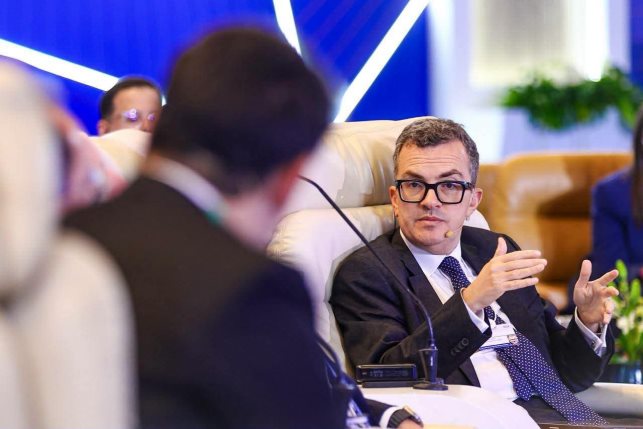
Speaking at the World Economic Forum's Country Strategy Meeting on Egypt, Rostom outlined the country's macroeconomic outlook, progress on structural reforms and government efforts to strengthen private sector participation in economic growth.
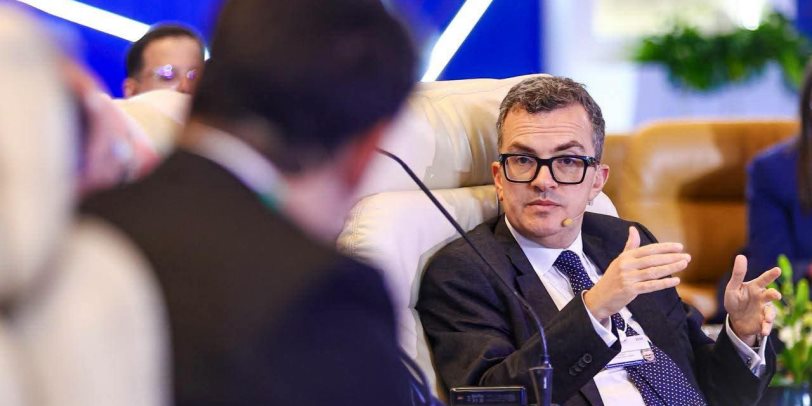
Egypt will officially complete its structural reform program agreed with the International Monetary Fund (IMF) by December 2026, paving the way for a new phase of inclusive and sustainable economic growth, Minister of Planning and Economic Development Ahmed Rostom said.
Speaking at the World Economic Forum's Country Strategy Meeting on Egypt, Rostom outlined the country's macroeconomic outlook, progress on structural reforms and government efforts to strengthen private sector participation in economic growth.
He said reforms implemented in recent years have delivered tangible results, including stronger macroeconomic indicators, sustained economic growth despite regional and global challenges, higher foreign exchange reserves and increased investment.
Rostom highlighted plans to launch the second version of Egypt's State Ownership Policy Document, aimed at positioning the private sector as the main driver of economic growth while shifting the government's role toward market regulation and creating a more favorable investment environment.
Under the plan, Egypt aims to increase the private sector's share of total investment to 67% by 2030, direct public investment toward strategic sectors and restructure state involvement in selected industries.
Rostom also outlined Egypt's National Economic Transformation Program through 2030, which seeks to shift the country's growth model toward five production- and export-oriented sectors: manufacturing, information and communications technology (ICT), tourism, energy and agriculture.
Together, these sectors account for approximately 40% of GDP, contribute 50% of economic growth and employ 40% of the workforce.
The government aims to attract greater foreign investment into these industries, supporting its target of raising economic growth to 6.8% while improving the quality and sustainability of growth. The program also seeks to reduce inflation to between 5 and 7% by 2030.
As part of its investment promotion efforts, the Ministry of Planning and Economic Development plans to launch an interactive project map through its official online portal.
The platform will provide a geographic overview of national development projects planned for 2027–2030, allowing investors to identify public investment opportunities and investment-ready industrial clusters based on each governorate's competitive advantages.
Rostom also highlighted initiatives to support entrepreneurship and innovation following the recommendations of Egypt Forum 2026, including a national initiative aimed at supporting the development of five unicorn companies over the next five years.
Through the technical secretariat of the Ministerial Group for Entrepreneurship, the ministry is overseeing the activation and operation of the Egypt Entrepreneurship and Innovation Center.
The government is also working to restructure the National Investment Bank to strengthen its institutional role in development financing, direct additional support toward startups and establish a fund of funds to provide financing for emerging businesses.
Rostom announced plans to launch the Infrastructure Finance Guarantee Facility (IFGF) in cooperation with the World Bank in the coming period.
The proposed mechanism will operate through a specialized company providing financial guarantees to private sector investors, drawing on successful international models.
It aims to facilitate access to long-term financing in local currency for privately developed infrastructure projects, helping attract investment into the sector.
Rostom said Egypt has completed a substantial portion of its economic reform agenda, establishing a stronger foundation for macroeconomic stability and sustainable growth.
He invited international investment funds, institutional investors and venture capital firms to explore the country's ongoing reforms and emerging investment opportunities, particularly in the startup ecosystem and infrastructure financing.
He emphasized that Egypt's next phase of economic development will focus on strengthening private sector participation, attracting investment and building a more sustainable and competitive economy.